Inside the Contract: Procurement, Transparency and Accountability in REA's 35MWp Kaduna Solar Award
Focus: Governance Perspective | REA Notification of Award 10 May 2021 (Ref: REA-NEP/C/EEI/25/18) | Contractor: International Consolidated Contractors Offshore SAL (Beirut) | US$46,219,403.17
Public infrastructure contracts in Nigeria often attract scrutiny, and rightly so. When public or donor-backed money is committed, citizens have a legitimate interest in how the contractor was chosen, what was promised and whether it is delivered. The REA's award for the 35MWp solarization at the Green Economic Zone, Maraban Jos, offers a useful case study.
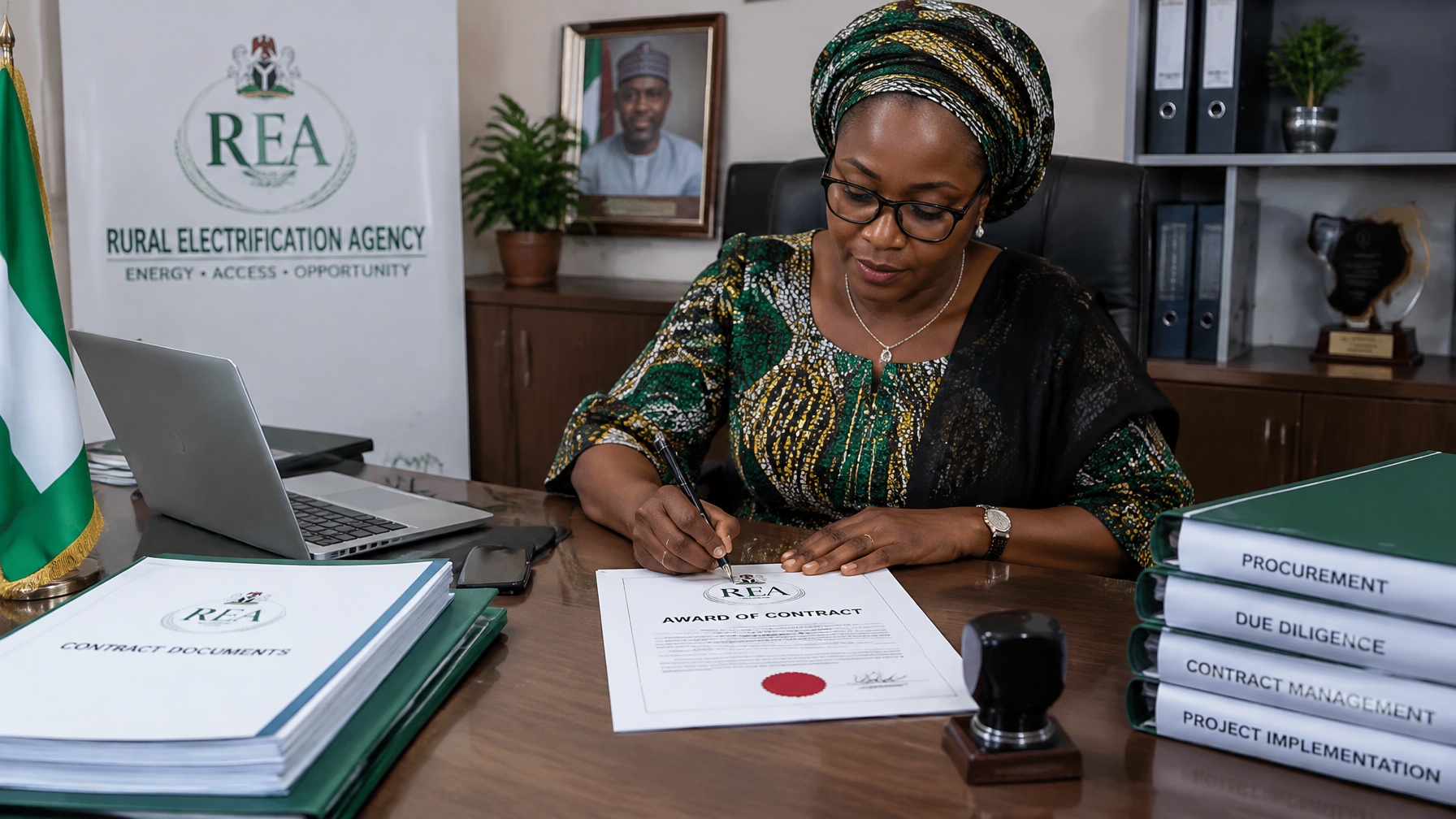
What the Award Letter Says
The Notification of Award, dated 10 May 2021 and carrying reference REA-NEP/C/EEI/25/18, was addressed to International Consolidated Contractors Offshore SAL of Beirut, Lebanon, under Contract No. REA-NEP/C/GO/RFP/98/15B. It confirmed that the firm's proposal of 8 March 2021 had been accepted, at a contract sum of US$46,219,403.17 inclusive of all indirect taxes.
The letter notes the amount was "corrected and modified" in line with the Instructions to Proposers — a standard step where evaluators adjust prices for arithmetic errors. It then set two conditions: the contractor was to provide a Performance Security within 28 days, and to submit a Beneficial Ownership Disclosure Form within eight business days. A draft contract agreement was attached. The letter was signed by Abba A. Aliyu, then Head of the Project Management Unit of the REA's Nigeria Electrification Project (now Managing Director of the REA).
A Structured, Rules-Based Process
Several features point to a formal, rules-based procurement. The contract was procured through a Request for Proposals (RFP), suited to complex projects where design and technical approach matter alongside price. References to a Proposal Data Sheet and Instructions to Proposers reflect structured tender documents commonly used in internationally financed projects.
The Nigeria Electrification Project itself is supported by the World Bank and African Development Bank. Projects under such programmes are generally subject to the financiers' procurement rules, which include open competition, published evaluation criteria and review mechanisms.

Why Beneficial Ownership Matters
The requirement to disclose beneficial ownership deserves attention. Beneficial ownership refers to the real people who ultimately own or control a company, as opposed to names on a registration certificate. Anti-corruption bodies worldwide have identified hidden ownership as a common channel for conflicts of interest and illicit enrichment in public contracting.
Transparency Safeguard: Requiring the winning bidder to disclose who truly stands behind it is a significant step. Nigeria has strengthened beneficial ownership reporting in recent years, and its inclusion here reflects that direction.

Performance Security as a Safeguard
The Performance Security, usually a bank guarantee equal to a percentage of contract value, protects the public purse. If a contractor fails to perform, the employer can draw on the security to recover losses. Its 28-day deadline is a standard feature of international contract conditions and signals the award was only the beginning of enforceable obligations.
What Accountability Looks Like From Here
A well-run award is necessary but not sufficient. Accountability depends on what happens after signing: whether milestones are met, whether variations are justified and disclosed, whether the plant is commissioned and performs as specified and whether the public is kept informed.
Civil society, journalists and local communities can play a role by following up through official channels, including the REA and Nigeria's freedom of information framework. Readers seeking current information on construction progress, commissioning or performance should rely on official REA communications and verified reporting.
The Bottom Line: From Award to Delivery
The 35MWp Green Economic Zone award shows many building blocks of good public procurement: competitive proposals, price correction, performance security and beneficial ownership disclosure. The real test of governance is delivery. A transparent award should be matched by transparent reporting on results.
Award At-A-Glance
| Item | Details |
|---|---|
| Employer | Rural Electrification Agency (REA) - Nigeria Electrification Project |
| Regulatory Ref | REA-NEP/C/EEI/25/18 dated 10 May 2021 |
| Contract No | REA-NEP/C/GO/RFP/98/15B |
| Contractor | International Consolidated Contractors Offshore SAL, Beirut, Lebanon |
| Contract Sum | US$46,219,403.17 (incl. indirect taxes, corrected/modified) |
| Key Conditions | Performance Security (28 days) + Beneficial Ownership Disclosure (8 business days) |
| Signatory | Abba A. Aliyu, Head PMU, NEP (now MD, REA) |
| Financing | World Bank & African Development Bank support |
Frequently Asked Questions
Q: Was the Kaduna solar award competitive?
Yes. Procured via Request for Proposals (RFP) with structured tender documents, under World Bank/AfDB procurement rules requiring open competition and published criteria.
Q: What is beneficial ownership disclosure?
Revealing the real individuals who ultimately own/control the winning company — a transparency safeguard against hidden conflicts of interest.
Q: How can citizens follow up on delivery?
Track official REA updates at rea.gov.ng, and use freedom of information requests. Accountability is about milestones, commissioning and performance reporting, not just the award letter.
Based on REA Notification of Award (Ref: REA-NEP/C/EEI/25/18, Contract No. REA-NEP/C/GO/RFP/98/15B, dated 10 May 2021) and public sources. For latest status, consult rea.gov.ng. Sources: REA 10 May 2021; U.S. International Trade Administration Nigeria Country Commercial Guide; ThisDay/allAfrica May 2026.

Comments
Post a Comment